Guide
Batch cooking: cook once, eat all week
Batch cooking means cooking a few large, versatile components once, usually on a weekend, then remixing them into different meals through the week instead of eating one dish on repeat. Roast a tray of vegetables, cook a big pot of grains, and prep a protein, then combine them differently each night. The trick to not getting bored is variety in the remix, not variety in the cooking session.
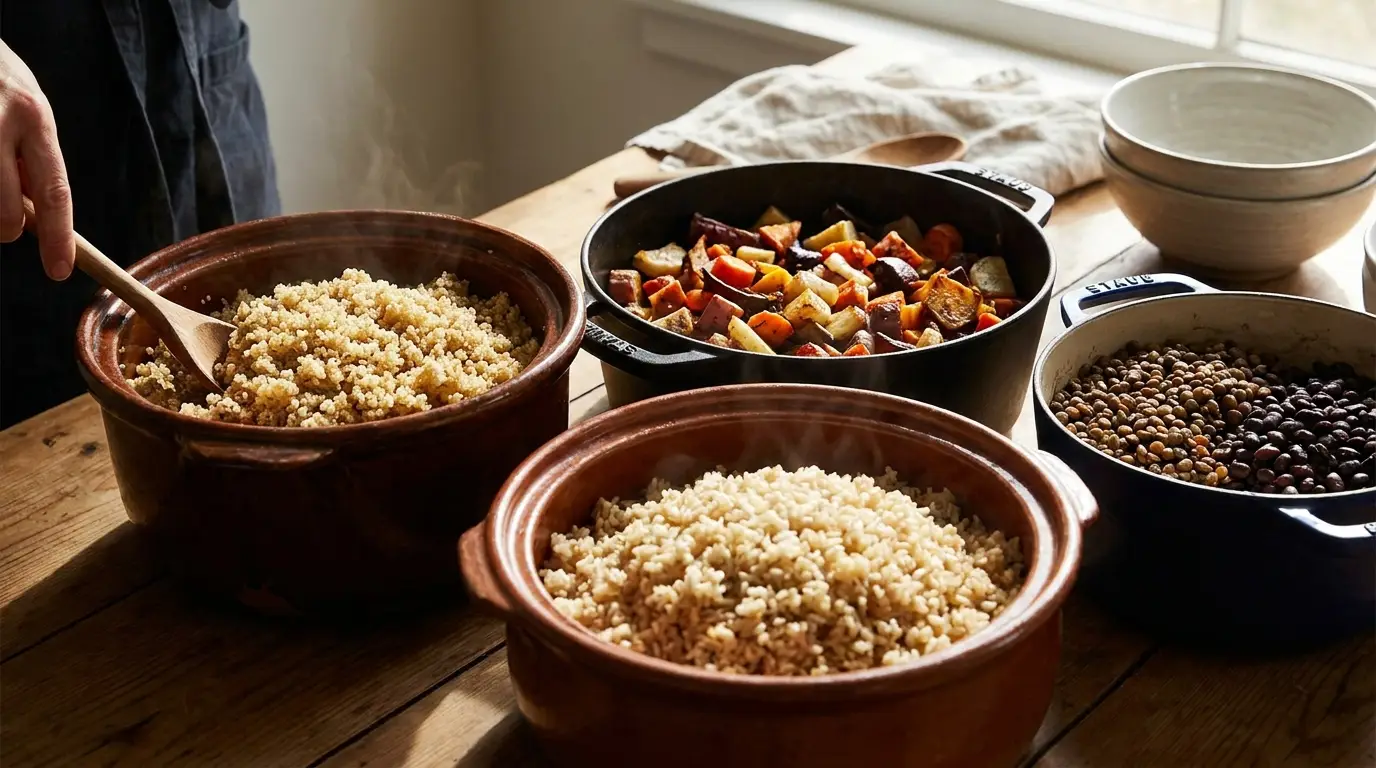
Pick bases that work in more than one meal
Choose a protein, a grain, and a vegetable that can each show up in at least three different dinners. Shredded chicken works in a salad, a wrap, and a soup. A pot of rice works under a stir-fry, inside a burrito bowl, and beside roasted vegetables. Picking flexible bases is what separates batch cooking from just making one huge casserole.
Good starting bases are a roast chicken or a tray of baked tofu, a neutral grain like rice or farro, and a big tray of roasted mixed vegetables. None of these taste like a finished meal on their own, which is exactly why they remix so well.
Cook once, then remix through the week
Set aside two or three hours once a week to cook your bases, then spend five to fifteen minutes each night turning them into that night's dinner. The same shredded chicken becomes tacos on Monday, a grain bowl on Wednesday, and a quick soup on Friday. The cooking is done in one session, but no two nights taste the same.
- Season bases simply during the cook so they can go in more directions later
- Keep sauces and toppings separate so one base can taste different each night
- Save one night as a flexible "clean-up" meal that uses whatever is left
Store it properly so it stays safe to eat
Cool cooked food before refrigerating, split it into shallow containers so it chills quickly, and plan to eat most batch-cooked components within three to four days. Anything you will not use by then should go in the freezer instead of sitting in the back of the fridge. Label containers with the date so you are not guessing later in the week.
Grains and roasted vegetables generally hold up well in the fridge for four days. Cooked meat and fish are best used within three to four days, or frozen sooner if you know the week is busy. This is general food-safety guidance, not medical advice, so use your own judgment and senses too.
Plan the rest of the week around your bases
Once your bases are cooked, the rest of the week's planning is just deciding which sauce, spice, or side turns each one into a new dinner. Write down the remixes in advance so you are not improvising on a tired Tuesday. This is exactly the kind of week Feastide builds automatically, matching meals to what you already have on hand.
A simple way to plan it: list your two or three bases on one side of a page, then list five quick remixes on the other side and pair them up. Turn the whole thing into one shopping list before you shop, the same way you would for any other weekly meal plan.
Frequently asked questions
What is the difference between batch cooking and meal prep?
How long does batch-cooked food last in the fridge?
What should I batch cook first if I am new to it?
Can batch cooking work for a whole household, not just one person?
Keep reading
Build a plan around your household
Set your diet, allergies, eaters, and budget once. Feastide plans the week and turns it into one aisle-grouped shopping list you'll actually use in the store.