Guide
How to store produce so it lasts longer
To store produce so it lasts longer, know which items belong in the fridge and which do best on the counter, keep ethylene-producing fruit away from ethylene-sensitive vegetables, and give herbs and leafy greens a bit of moisture instead of letting them dry out in a bag. A few small habits routinely add several extra days to a bag of produce.
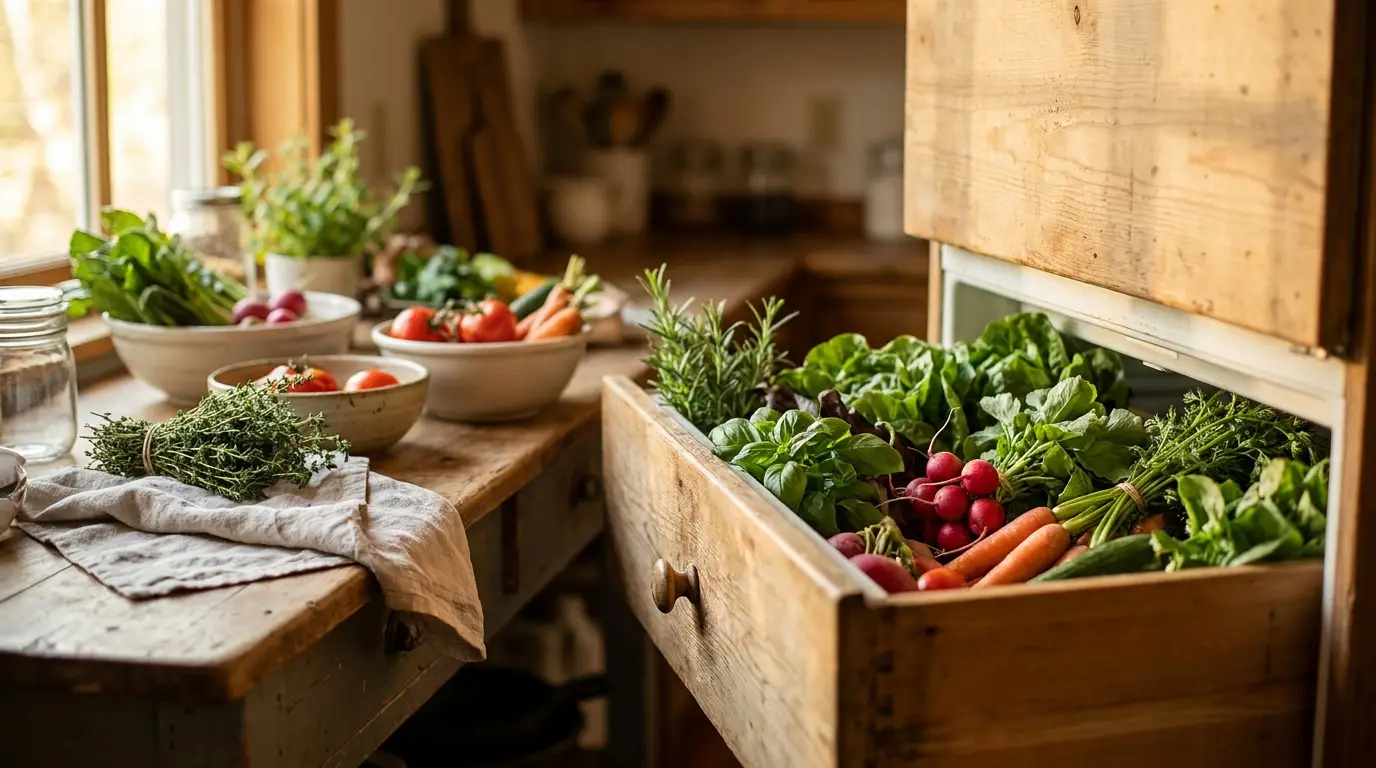
Know what actually belongs in the fridge
Not everything keeps better cold. Tomatoes, potatoes, onions, garlic, and whole melons do better on the counter or in a cool, dark cupboard, while most other vegetables and cut produce last longer in the fridge's crisper drawers. Getting this split right is one of the simplest changes that measurably extends how long produce lasts.
Cold temperatures can turn a tomato mealy and dull a potato's flavor, so both are better left out. Onions and garlic do best somewhere dry and dark, away from direct sunlight, rather than in the fridge or under the sink.
Keep ethylene-producing fruit away from sensitive vegetables
Apples, bananas, avocados, and pears release ethylene gas as they ripen, which speeds up spoilage in nearby produce, especially leafy greens, broccoli, and berries. Storing ethylene producers in a separate drawer or bowl, away from ethylene-sensitive items, keeps the rest of your produce from aging faster than it needs to.
| Ethylene producers | Ethylene sensitive |
|---|---|
| Apples, bananas, avocados, pears | Leafy greens, broccoli, berries, cucumbers |
Give herbs and leafy greens a bit of moisture
Herbs and leafy greens dry out fast in a plain fridge drawer. Treat soft herbs like a bouquet, trim the stems and stand them in a jar of water, and wrap leafy greens loosely in a damp towel before bagging them. Both tricks can roughly double how many days they stay usable.
Basil is the one exception: it does better on the counter in water, not the fridge, which can turn its leaves dark and slimy. Most other soft herbs, like cilantro and parsley, do well with the jar-of-water method chilled.
Build a five-minute storage habit after every shop
The biggest gains come from a short sorting routine right after you shop, not from any single trick. Spend five minutes moving ethylene producers apart, trimming herbs into water, and wrapping greens before anything hits the crisper drawer, and produce reliably lasts noticeably longer through the week.
Doing this once, right when groceries come in, is far more effective than trying to fix wilting produce mid-week. It also makes it easier to see what you have, which helps you use it before it turns.
Frequently asked questions
Should tomatoes be stored in the fridge?
What is ethylene gas and why does it matter for produce?
How do I keep herbs fresh for more than a few days?
Does better produce storage actually reduce food waste?
Keep reading
Build a plan around your household
Set your diet, allergies, eaters, and budget once. Feastide plans the week and turns it into one aisle-grouped shopping list you'll actually use in the store.