Guide
Meal planning for beginners: a simple starter system
Meal planning for beginners starts with three moves: count the dinners you'll really cook this week, pick simple meals that reuse a few shared ingredients, and write one shopping list before you shop. Skip the elaborate spreadsheets and themed categories at first. A minimal system you'll actually repeat beats an ambitious one you abandon after a week.

Count how many nights you'll really cook
Before picking a single recipe, count how many dinners you'll actually cook this week, not seven. Most beginners overplan, listing seven dinners then abandoning the plan by Wednesday when leftovers, takeout, or a late night eat into the schedule. Start with four nights, leave the rest open, and the plan will hold.
Look at your week before you look at any recipe. A late work night or a dinner out means one less night to plan for, and pretending otherwise is the fastest way to end up with wasted food and a plan you quietly stop following.
Pick a handful of simple, forgiving meals
As a beginner, choose meals with five or six ingredients and a method you already know, like a sheet-pan dinner, a stir-fry, or a big salad with protein. Save ambitious new techniques for a weekend when there's no pressure. Simple meals are also easier to shop for and less likely to go wrong on a tired weeknight.
- A sheet-pan dinner: protein and vegetables, one pan, one oven temperature
- A stir-fry: whatever vegetables you have, a protein, rice
- A big salad with a grain and a protein added
- Pasta with a simple sauce and a vegetable stirred in
Let a few ingredients do double duty
Pick meals that share two or three ingredients, like a bag of spinach, a block of cheese, or a rotisserie chicken, so nothing sits in the fridge for a single use. This is the easiest way for a beginner to cut both cost and waste without any extra planning effort. Overlap, not variety, is what makes a starter system efficient.
You don't need a spreadsheet to spot the overlap, just glance at your short list of meals before you shop and notice which ingredients repeat. A rotisserie chicken that shows up in a salad on Monday and a wrap on Wednesday is one purchase doing the work of two.
Write one shopping list before you shop
Turn your handful of meals into a single combined list, grouped loosely by where you'll find things in the store, and shop from it once. Skip the daily what's-for-dinner question entirely, since the plan already answered it. This one habit, more than any recipe choice, is what makes meal planning stick for beginners.
This is also the step Feastide automates once you're ready for it: it turns a generated week of meals into one combined, aisle-grouped list, so a beginner system can grow up without you ever having to build the spreadsheet yourself.
Frequently asked questions
How do I start meal planning as a total beginner?
How many meals should a beginner meal plan include?
Do I need special tools or a spreadsheet to meal plan?
What if my week changes after I've planned it?
Keep reading
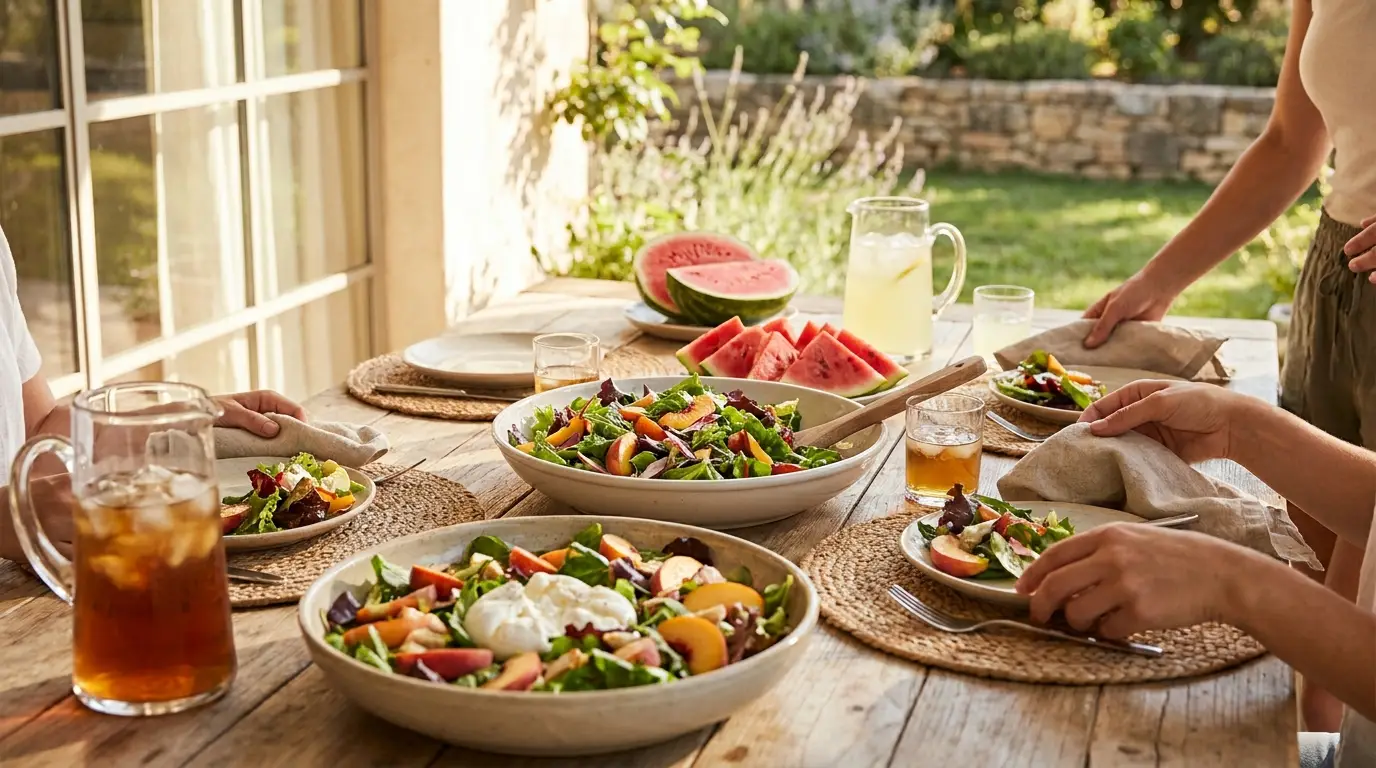
Summer meal planning for hot, busy days
How to plan light, quick, no-oven summer meals for hot days and busy schedules, then shop for the week in one trip.
How to build a weekly meal plan you'll actually follow
A simple, repeatable way to plan a week of meals around your household, cut the daily what-is-for-dinner scramble, and shop once. Seven steps, no spreadsheet required.
Build a plan around your household
Set your diet, allergies, eaters, and budget once. Feastide plans the week and turns it into one aisle-grouped shopping list you'll actually use in the store.