Guide
Meal prep for beginners: where to start
For beginners, meal prep works best as prepping a few components, like cooked grains, roasted vegetables, and a protein, rather than five identical full meals. Start with one or two hours on a weekend, prep enough for three or four meals, and mix the components differently each day so nothing feels repetitive. Build the habit small before you scale it up.
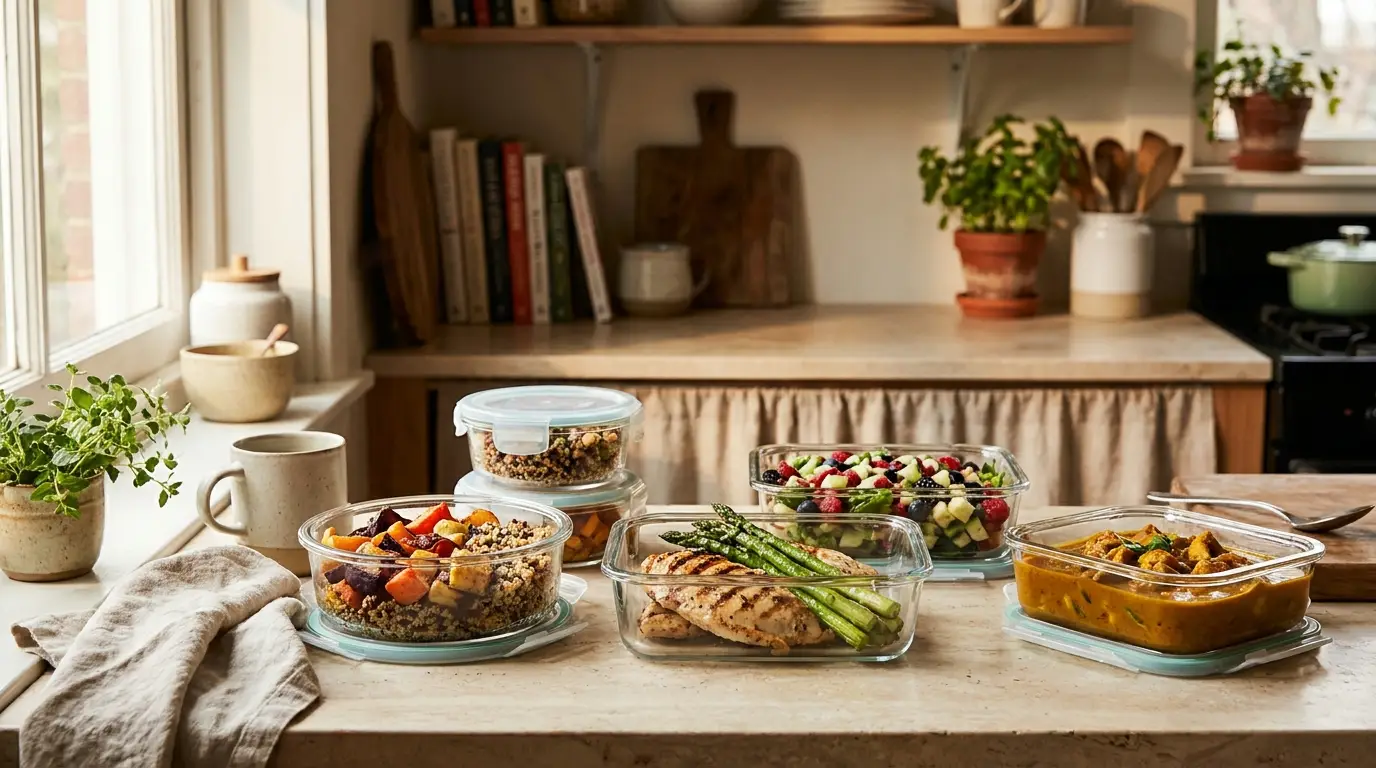
Prep components, not five identical meals
As a beginner, prep building blocks, a grain, a protein, and a vegetable, that you can recombine differently each day instead of committing to the same boxed meal five days running. This approach takes roughly the same time as prepping full meals but avoids the boredom that makes most beginners quit meal prep within two weeks.
- A grain: rice, quinoa, or pasta, cooked in one big batch
- A protein: roasted chicken thighs, baked tofu, or a pot of beans
- A vegetable: a tray of roasted vegetables or a bag of washed greens
Start with a small, realistic amount
Prep enough for three or four meals in your first week, not the full seven, so you can see what you'll actually eat before committing more time and groceries to it. Overprepping is the fastest way to end up with sad, forgotten containers at the back of the fridge. You can always prep more once the habit sticks.
Treat your first week or two as a trial run. If you only ate through three of your four prepped meals, that's useful information, not a failure, and it tells you exactly how much to prep next time.
Store it right so it actually gets eaten
Use clear containers so you can see what's inside at a glance, and keep cooked proteins and grains for three to four days in the fridge, freezing anything you won't use by then. Labeling containers with the date takes ten seconds and is what stops half-used prep from quietly expiring in the back of the fridge.
Keep prepped components at eye level in the fridge rather than pushed to the back, where they're easy to forget. A visible container is far more likely to get used than one hiding behind last week's leftovers.
Avoid boredom with a few swappable sauces
Keep two or three sauces or seasoning blends on hand, like a lemon vinaigrette, a spicy chili sauce, or a simple marinade, so the same prepped grain and protein can taste different across the week. A new sauce is a far smaller effort than cooking a whole new meal, and it's usually enough to keep prepped food appealing by day four.
Change the format too, not just the sauce: the same components can be a bowl on Monday, a wrap on Tuesday, and a quick stir-fry on Wednesday, which does most of the work of making the week feel varied.
Frequently asked questions
What's the easiest way to start meal prepping as a beginner?
How much food should a beginner meal prep at once?
How long does prepped food actually last in the fridge?
How do I stop meal prep from getting boring?
Keep reading
How to set a realistic grocery budget
How to set a grocery budget that fits your household, track it without spreadsheets, and plan meals that stay close to your target.
How to build a weekly meal plan you'll actually follow
A simple, repeatable way to plan a week of meals around your household, cut the daily what-is-for-dinner scramble, and shop once. Seven steps, no spreadsheet required.
Build a plan around your household
Set your diet, allergies, eaters, and budget once. Feastide plans the week and turns it into one aisle-grouped shopping list you'll actually use in the store.