Guide
30-minute dinners for busy weeknights
A reliable 30-minute dinner comes down to technique and a stocked pantry, not a special recipe: a hot pan, a quick sauce, and a handful of staples that cook fast. Keep a small rotation of five or six go-to meals, like stir-fries, sheet-pan dinners, and one-pot pastas, so you are choosing from a known list instead of improvising from scratch on a tired weeknight.
Keep a pantry built for speed
Fast dinners depend on a handful of staples that turn into a sauce or base in minutes: canned tomatoes, stock, soy sauce, garlic, and a starchy carb like pasta or rice. Keep these stocked at all times so a fast dinner is always one trip to the fridge for fresh vegetables and protein away, never a full grocery run.
A well-stocked pantry does most of the flavor work. Garlic, ginger, a good soy sauce, canned tomatoes, and a few dried spices turn plain protein and vegetables into a finished dinner without a long ingredient list.
Lean on techniques that scale to whatever you have
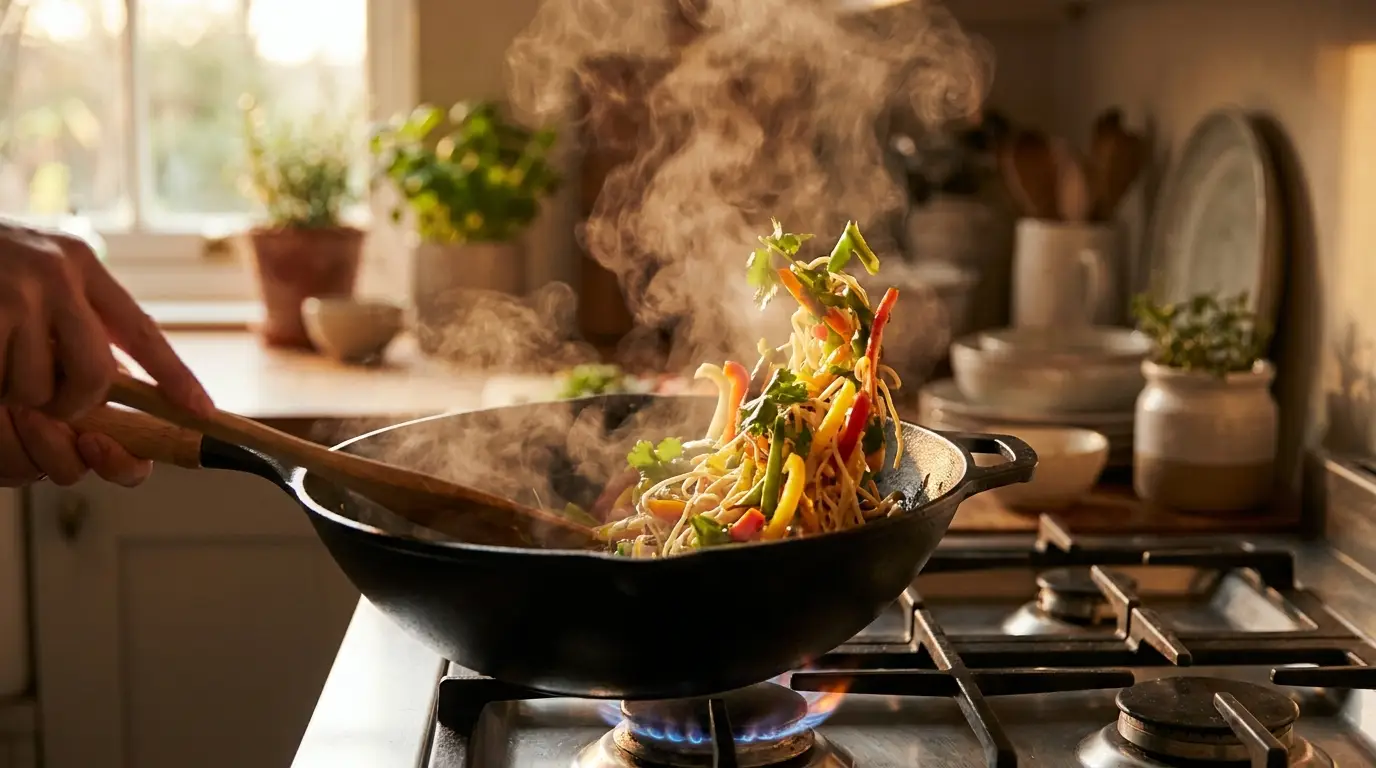
Stir-fries, sheet-pan roasts, and one-pot pastas are fast because the technique, not the exact ingredients, does the work. Learn the ratios once, protein plus vegetable plus sauce for a stir-fry, protein and vegetables tossed in oil for a sheet pan, and you can swap in whatever is fresh or needs using up without slowing down.
| Technique | Typical time | Works with |
|---|---|---|
| Stir-fry | 15 to 20 minutes | Any protein and quick-cooking vegetables |
| Sheet-pan roast | 25 to 30 minutes | Chicken, sausage, or tofu with hearty vegetables |
| One-pot pasta | 20 minutes | Pantry sauces, leftover vegetables, canned beans |
Build a small rotation instead of hunting new recipes
You don't need dozens of fast recipes, you need five or six you can make without thinking and rotate through the week. A short, memorized rotation is faster to shop for, easier to cook without a recipe open, and removes the daily what's-for-dinner decision that is usually the slowest part of a weeknight.
Write your rotation down once and keep it somewhere visible, like the fridge or a notes app. Refresh one meal every month or two so it stays interesting without ever feeling like a new project.
Plan the busiest nights around your fastest meals
Look at your week before deciding what to cook, and put a 30-minute meal on the two or three nights that are genuinely tightest. Save any slightly longer cook for a night with more breathing room, so the fast meals are working where you actually need them instead of scattered at random.
This is the same principle as any weekly plan: match the meal to the night, not the other way around. A fast rotation only pays off when it lands on the nights that need it.
Frequently asked questions
What pantry staples make weeknight dinners faster?
Can 30-minute dinners still be healthy?
How many fast dinner recipes do I actually need?
What's the fastest cooking technique for weeknights?
Keep reading
Batch cooking: cook once, eat all week
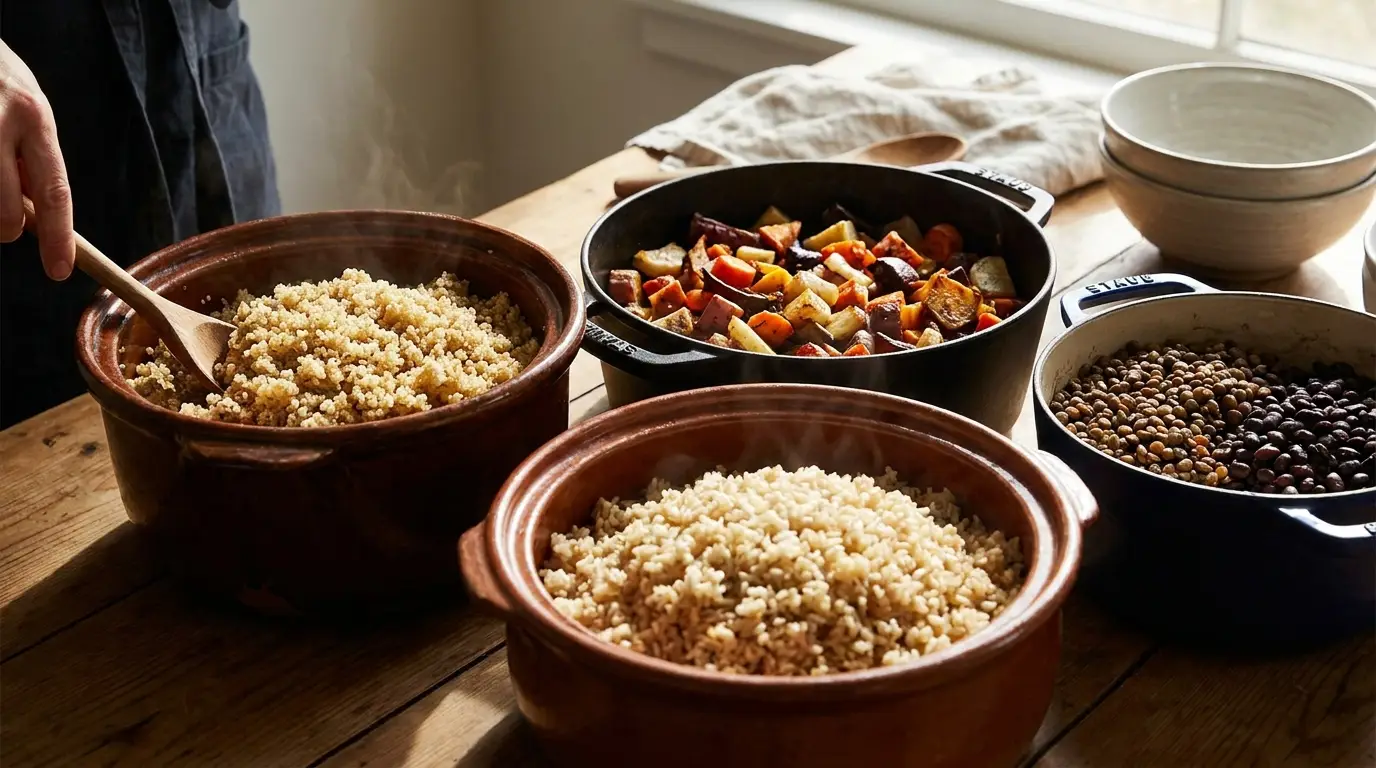
How to batch cook without eating the same meal five times: pick versatile bases, cook once, and remix them into different dinners through the week.
How to build a weekly meal plan you'll actually follow
A simple, repeatable way to plan a week of meals around your household, cut the daily what-is-for-dinner scramble, and shop once. Seven steps, no spreadsheet required.
Build a plan around your household
Set your diet, allergies, eaters, and budget once. Feastide plans the week and turns it into one aisle-grouped shopping list you'll actually use in the store.