Guide
How to write a grocery list that saves time and money
To write a grocery list that saves time and money, build it from your actual meal plan, combine the quantities across recipes, and group everything by aisle before you shop. A scattered, recipe-by-recipe list leads to doubling back and forgotten items. One organized, combined list turns a chaotic trip into a quick, single loop through the store.
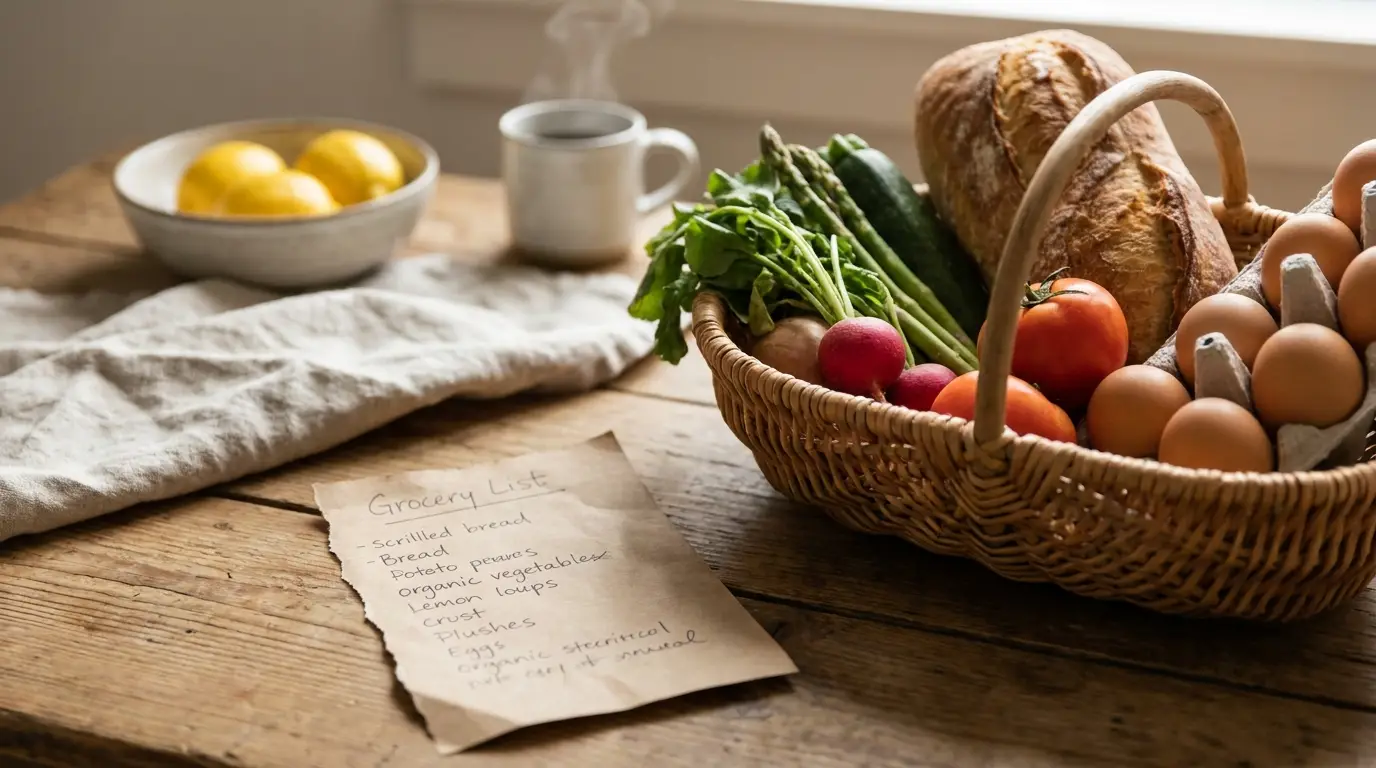
Start from your meal plan, not memory
Build your list directly from the meals you're actually cooking that week rather than trying to recall what's low at home. Working from a plan catches ingredients you'd otherwise forget and stops you from buying things you already have. A list built from memory alone is the fastest way to end up short an ingredient mid-recipe.
Go recipe by recipe first, jotting down every ingredient, then check your fridge and pantry against that raw list before you finalize it. It takes a few extra minutes and saves an entire second trip later in the week.
Combine quantities across recipes before you shop
Add up how much of each ingredient your week's recipes need before you go, so you buy one bag of onions instead of grabbing a new one for every recipe that calls for one. This single step prevents both overbuying, where food goes to waste, and underbuying, where you're back at the store two days later.
| Messy, recipe-by-recipe list | Combined, organized list |
|---|---|
| Onion (recipe 1) Milk Onion (recipe 3) Bread Onion (recipe 4) | Produce: 3 onions Dairy: milk Bakery: bread |
Group the list by aisle, not by recipe
Reorder your combined list to match how you actually walk the store: produce, then dairy, then pantry, then frozen, instead of leaving it clustered by recipe. Walking the store once in one direction, instead of doubling back for a forgotten spice, is where most of the time savings come from. It also makes an in-a-hurry trip far less stressful.
You only need to set this order up once. Most stores keep the same rough layout, so a list template grouped by produce, dairy, pantry, and frozen will work trip after trip with barely any adjustment.
Include the non-food items too
Add the household items you'll run out of, like dish soap, paper towels, or dog food, to the same list instead of treating them as a separate errand. A single combined list, food and non-food together, is what actually gets you through the whole week in one trip. Splitting it into two lists is how the extra mid-week run happens.
Feastide builds exactly this kind of list automatically from your weekly plan, combined quantities, grouped by aisle, non-food items included, so the organizing step never falls on you.
Frequently asked questions
What makes a grocery list actually save money?
Should I organize my grocery list by recipe or by aisle?
How do I stop forgetting things on a shopping trip?
Can an app build my grocery list automatically?
Keep reading
Meal prep for beginners: where to start
A beginner guide to meal prep: what to prep, how much, and how to keep it from getting boring. Start small and build a habit.
How to build a weekly meal plan you'll actually follow
A simple, repeatable way to plan a week of meals around your household, cut the daily what-is-for-dinner scramble, and shop once. Seven steps, no spreadsheet required.
Build a plan around your household
Set your diet, allergies, eaters, and budget once. Feastide plans the week and turns it into one aisle-grouped shopping list you'll actually use in the store.