Guide
How to reduce food waste at home
To reduce food waste at home, plan meals around what you'll actually cook instead of an ideal week, store fruits and vegetables the way they keep longest, shop your fridge before you shop the store, and build a weekly habit of using up odds and ends before they turn. Small habits, not willpower, are what actually cut waste.
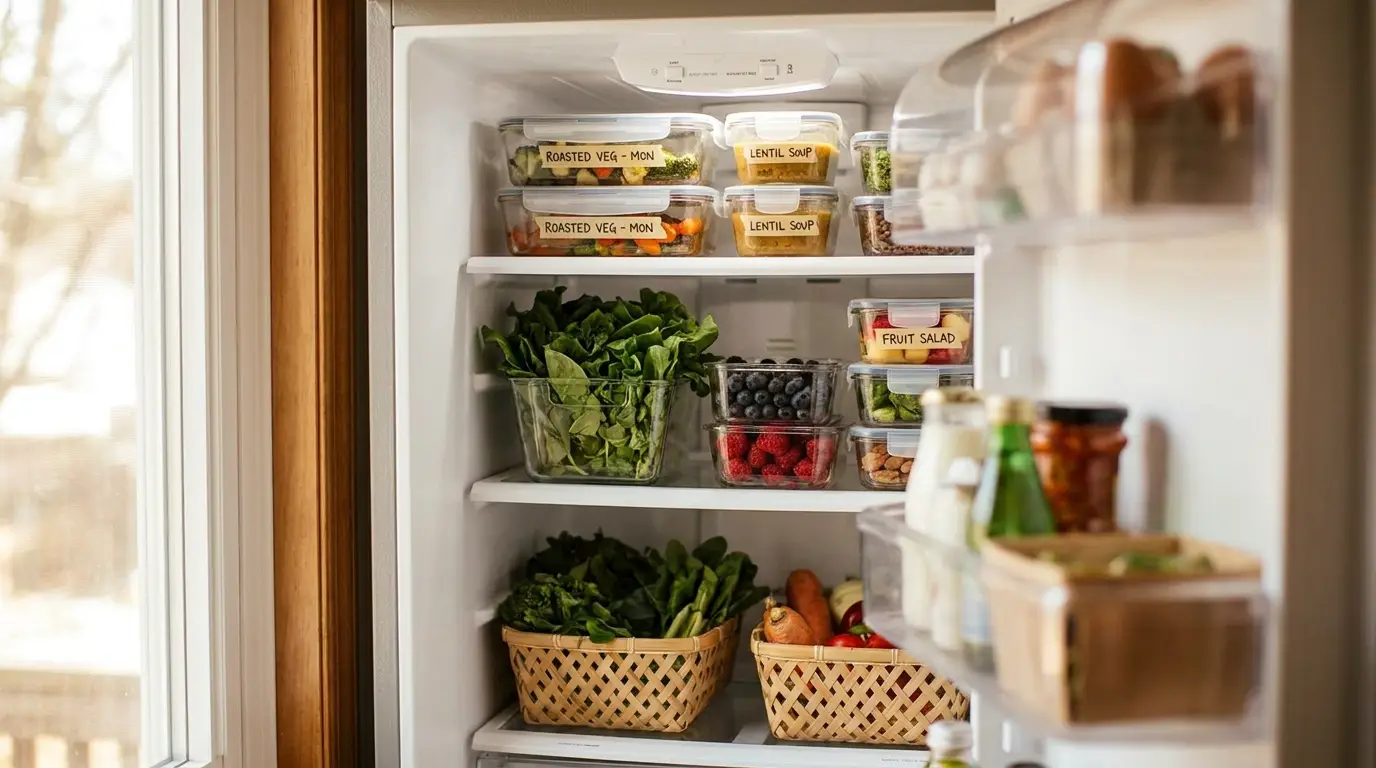
Plan to the week you'll actually cook, not the week you wish you had
Most food waste starts at the planning stage, when a week is planned around seven home-cooked dinners but only four or five actually happen. Count your real cook-nights first, plan meals only for those, and leave the rest as leftovers, takeout, or a pantry night so nothing bought for Tuesday rots because Tuesday became a takeout night instead.
A five-dinner plan for a real five-cook-night week produces almost no waste. A seven-dinner plan for a real four-cook-night week reliably produces three rotting bags of produce by Sunday. Plan for the week you have, not the one on paper.
Store food the way that actually keeps it fresh
How you store food changes how long it lasts by days, sometimes a full week. Keep ethylene-producing fruit like apples and bananas away from ethylene-sensitive vegetables like leafy greens, store herbs like flowers in a jar of water, and move milk and eggs to the coldest part of the fridge rather than the door. A few minutes of sorting after a shop pays for itself.
- Leafy greens and herbs: wrap loosely in a damp towel or store upright in a jar of water.
- Apples, bananas, and avocados: keep apart from other produce, they speed up ripening nearby.
- Milk, eggs, and leftovers: store on a shelf, not the door, where the temperature swings least.
Shop your fridge and pantry before you shop the store
Before writing next week's plan, do a two-minute lap of the fridge and pantry and build one or two meals around whatever is closest to its end. This single habit, checking what you already have before deciding what to cook, is one of the simplest ways to stop good food from being pushed to the back and forgotten until it spoils.
Keep a small eat-me-first shelf at eye level in the fridge for anything nearing its end. It takes seconds to glance at and turns "I forgot we had that" into "let's use that tonight."
Build a weekly use-it-up habit
Pick one night a week, a fridge clear-out night, where dinner is built entirely from what is already in the house: odd vegetables into a stir-fry, wilting herbs into a sauce, half a can of beans into a soup. This one recurring meal absorbs most of the small leftovers that would otherwise go to waste, and it costs you nothing extra to shop for.
Fried rice, frittatas, soups, and stir-fries are the most forgiving formats because they accept almost anything in almost any ratio. Treat the format as the recipe and let whatever is in the fridge fill in the ingredients.
Frequently asked questions
How much food does the average household actually waste?
What is the single biggest cause of food waste at home?
Does freezing count as reducing food waste?
Does meal planning actually reduce food waste?
Keep reading

30-minute dinners for busy weeknights
A system for reliable 30-minute dinners: the pantry to keep, the shortcuts that work, and how to plan a week of them.
How to build a weekly meal plan you'll actually follow
A simple, repeatable way to plan a week of meals around your household, cut the daily what-is-for-dinner scramble, and shop once. Seven steps, no spreadsheet required.
Build a plan around your household
Set your diet, allergies, eaters, and budget once. Feastide plans the week and turns it into one aisle-grouped shopping list you'll actually use in the store.