Guide
Summer meal planning for hot, busy days
Summer meal planning works best when you lean on the foods that need the least cooking: salads, grain bowls, and grilled proteins that don't heat up the kitchen. Plan around the days you're actually home, keep two or three no-cook meals in rotation for the hottest evenings, and stock hydrating produce like watermelon and cucumber that pulls double duty as snacks.
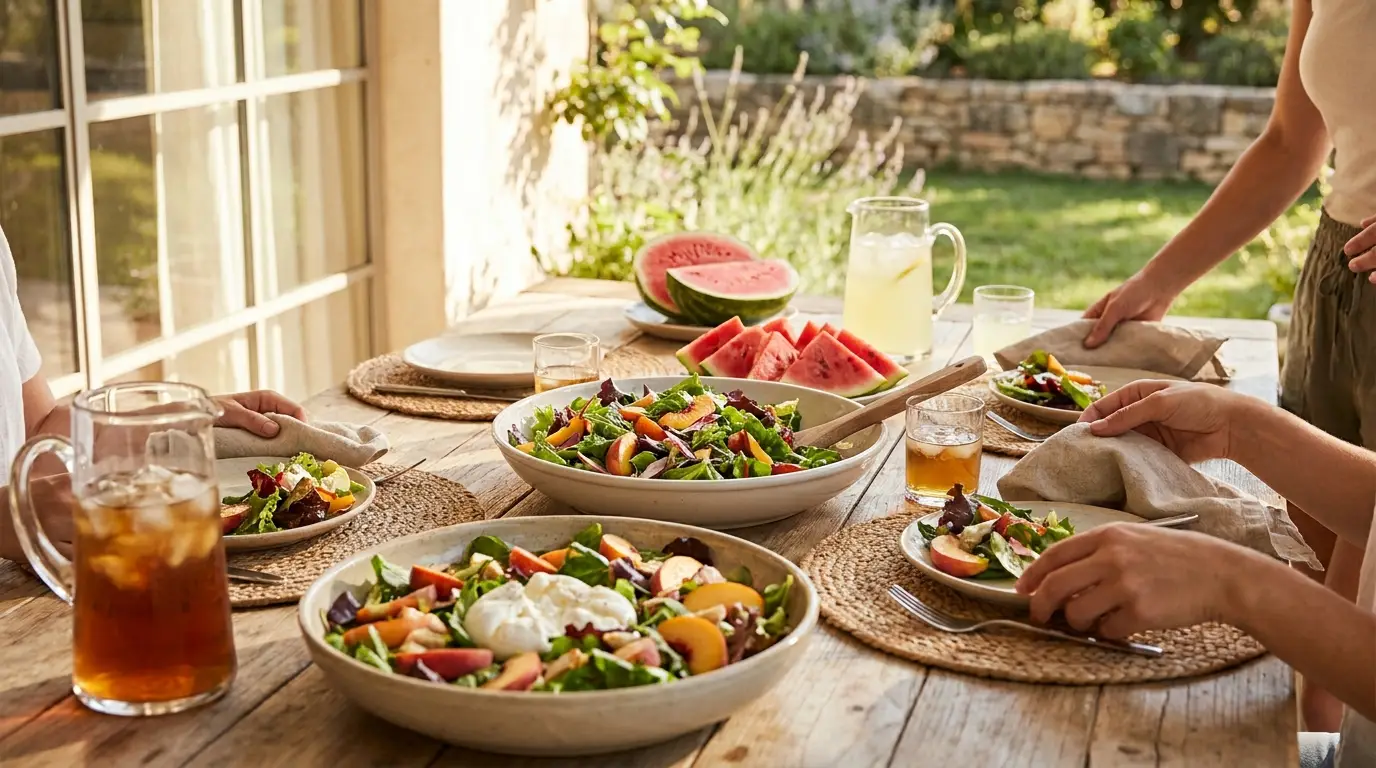
Plan around the heat, not just the calendar
On the hottest days, default to meals that need little or no stovetop time: cold noodle bowls, big salads with grilled protein, or sandwiches built from whatever's in the fridge. Save the one oven-heavy dinner for a cooler evening or push it outside to the grill. Matching meals to the weather keeps the kitchen bearable and dinner from feeling like a chore.
Check the forecast, not just your calendar, when you plan. If a heat wave lands on the night you'd scheduled a roast, swap it for a salad night and push the roast to whichever evening actually cools down.
Build the week around grill and no-cook staples
Keep a short rotation of go-to summer meals ready to repeat: grilled chicken or fish with a quick salad, a big grain bowl, or a platter of cold cuts, cheese, and bread. These need almost no active cooking time and hold up well for backyard dinners or a night when nobody wants to be inside. Repetition is a feature in summer, not a failure.
- Grilled chicken or fish with a fast side salad
- A grain bowl built from whatever's prepped and cold
- A cold platter: cured meats, cheese, bread, sliced vegetables
- Cold noodle salad with a quick peanut or sesame dressing
Shop for produce that pulls double duty
Stock hydrating, in-season produce like watermelon, cucumber, tomatoes, and berries that work as a side, a snack, or a quick addition to a salad. Buying versatile produce means less decision-making mid-week and less waste if plans shift, since almost anything can become a quick plate. It also keeps the grocery bill down since summer produce is often at its cheapest.
A bowl of cut watermelon or cucumber sitting in the fridge covers a snack, a side, and a filler for tomorrow's salad, all from one purchase. In-season produce is also usually the best value in the store during summer months.
Shop once and keep the list flexible
Write one shopping list for the week that leans on staples you can mix and match rather than rigid single-use recipes, since summer schedules change fast with travel and plans. Group the list by aisle so a hot, rushed trip to the store stays short. A flexible, once-a-week shop beats several sweaty trips for forgotten items.
Feastide builds this kind of aisle-grouped list automatically from your plan, so a busy summer week still gets one trip instead of three, even when the plan itself stays loose.
Frequently asked questions
What should I cook when it's too hot to use the oven?
How do I meal plan around a busy or changing summer schedule?
What summer produce is cheapest and most useful to buy?
Can I still batch cook in summer without heating up the kitchen?
Keep reading
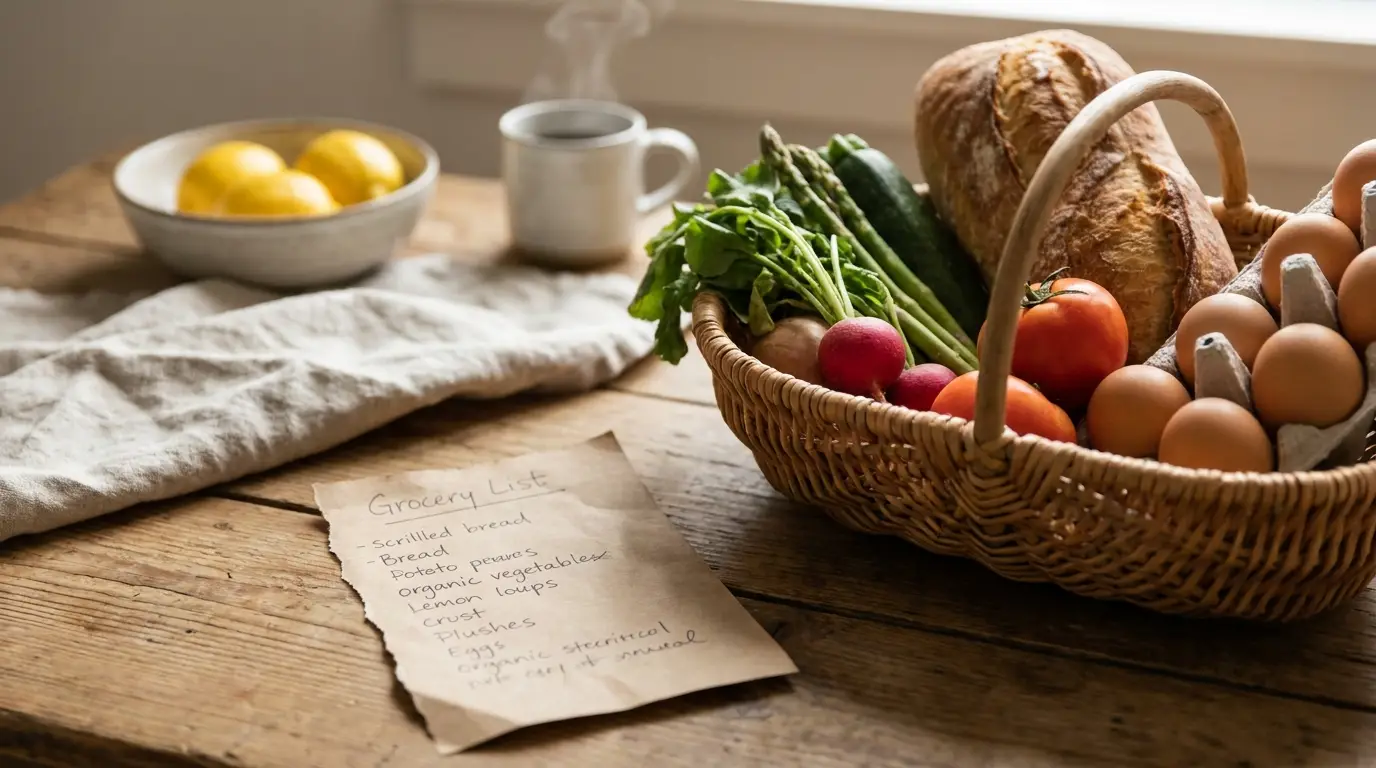
How to write a grocery list that saves time and money
How to write a grocery list that is combined, aisle-grouped, and built from your meals so you shop once and skip impulse buys.
How to build a weekly meal plan you'll actually follow
A simple, repeatable way to plan a week of meals around your household, cut the daily what-is-for-dinner scramble, and shop once. Seven steps, no spreadsheet required.
Build a plan around your household
Set your diet, allergies, eaters, and budget once. Feastide plans the week and turns it into one aisle-grouped shopping list you'll actually use in the store.